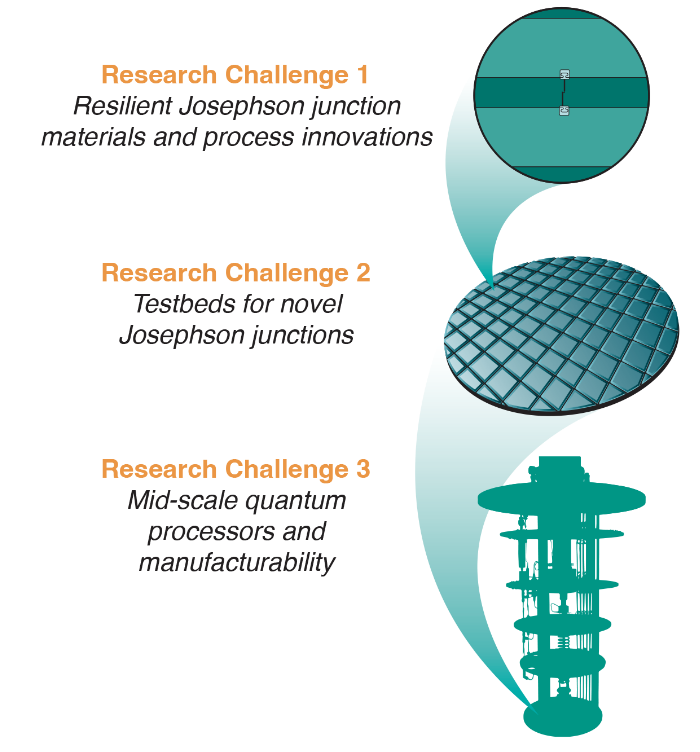
Research Challenge 1: Resilient Josephson junction (JJs) materials and process innovations
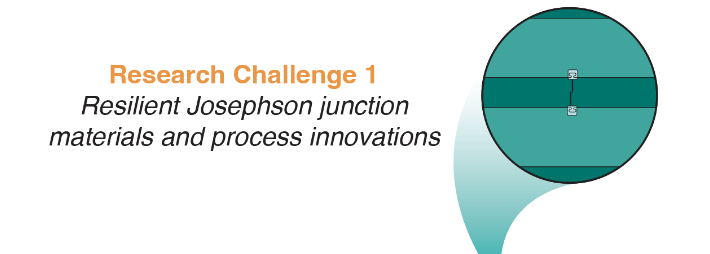
The first challenge is to replace the Al/AlOx JJs with more resilient materials with better crystallinity and lower barrier heights to achieve better performance when integrated into the fullstack fabrication process. The invention of a new material system for JJs represents a grand challenge; very few materials have been explored in 25 years of superconducting qubit development. The incorporation of a new material stack with better crystallinity and tunnel barrier height control will require innovative process developments to be developed in our institute.
Research Challenge 2: Testbeds for novel Josephson junctions
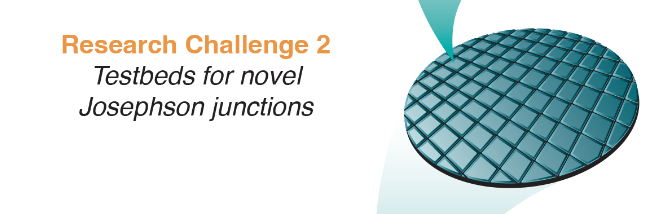
The second challenge is to reliably characterize both the materials and the devices, to determine the key structure-property relationships. We will develop benchmarks and measurements to enable fair comparisons across fabrication methods and material systems, resolving a lack of standardized measurement methods and metrics across the community and a paucity of materials characterization benchmarks that correlate with device property benchmarks. Materials discovery, particularly by new entrants to the field, will be significantly accelerated by measurement protocols and testbeds developed by the proposed institute that directly report on the contributions of materials to device performance, especially in the context of open-source designs, protocols, and user facilities to compare materials.
Research Challenge 3: Mid-scale quantum processors and manufacturability
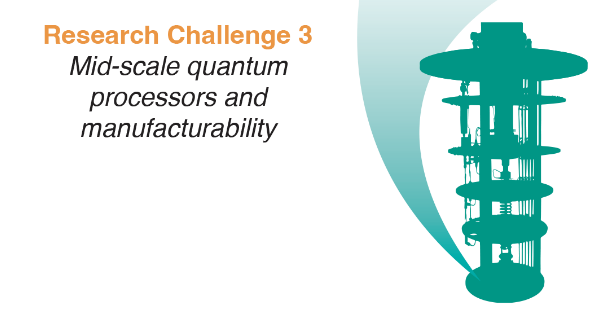
Because a new JJ or fabrication process is only useful if it can be scaled up, the third piece of the puzzle will be bridging efforts to develop scalable fabrication methods and scalable technologies to enable better processor performance, which are then tested at scale. New materials and fabrication processes will need to be validated and refined at the 200 mm scale as a stepping-stone to 300 mm implementation.
MARQUIS Research Challenges
Education, Training, and Workforce Development (ETWD)
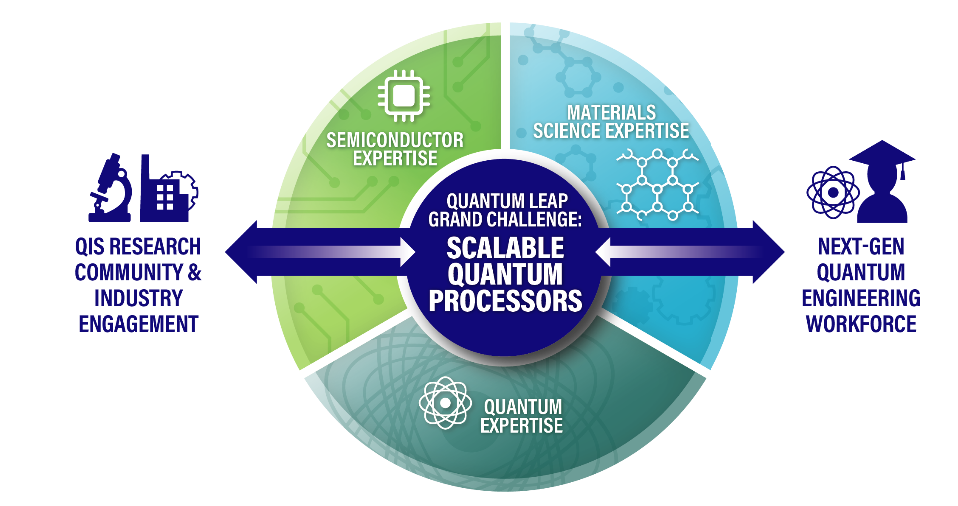
Our institute will combine academic and industrial training with robust mentorship to help build a strong workforce for next-generation quantum information science (QIS) research and technology. MARQUIS will ensure that a large cohort of trainees with cross-disciplinary training will enter the workforce and become leaders in the burgeoning field of QIS, thereby ensuring the broader impact of MARQUIS on society beyond scientific and technical advances. We will relaunch and expand Quantum Undergraduate Research at Industry and Princeton (QURIP), a hybrid industrial-academic undergraduate research experience. We will develop a quantum course-based research experience (QCURE) for undergraduate students that will be open-sourced to Pmaximize its impact and accessibility, and we will create an innovative database for use in both research and education (Q-VAULT). To promote a culture of innovation, we will develop networks for academic and entrepreneurial mentorship that tie into programs targeting students who have not yet been exposed to QIS. These mentorship and training programs will be tightly interconnected with corporate affiliates and entrepreneurship training programs to establish a quantum engineering innovation hub within MARQUIS.